
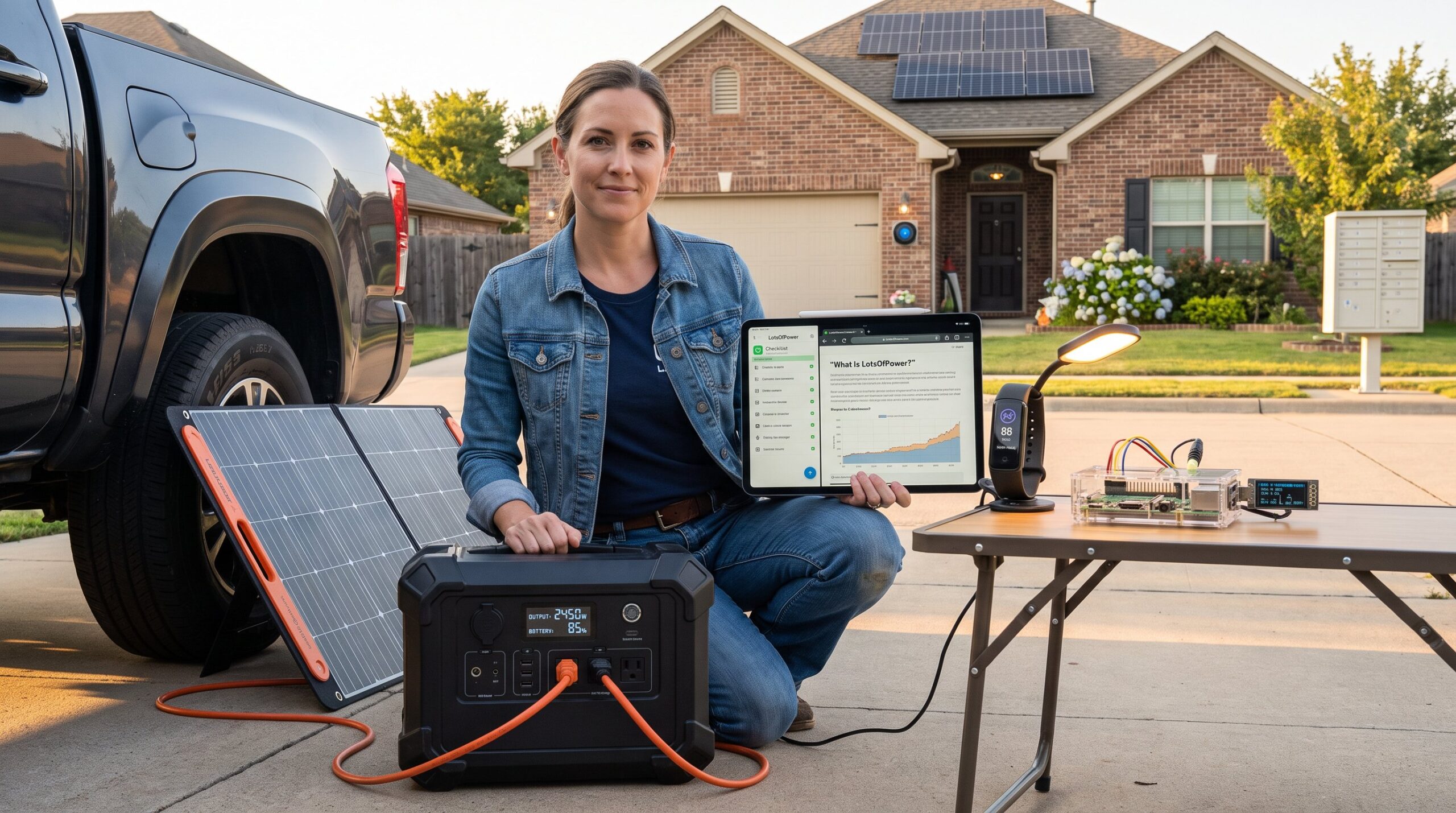
What Is LotsOfPower? The site blends renewable energy, wellness, and tech to help gamers sustain peak performance. LotsOfPower frames power as both electrical reliability and human energy: portable solar and backup systems meet nutrition, sleep, and recovery advice so players can compete consistently. This guide explains the mission, practical wellness protocols, hardware and charging solutions, and how gamers apply these resources in daily routines and esports settings.
Key Takeaways
- LotsOfPower integrates renewable energy, wellness, and technology to help gamers maintain peak performance and reliable power.
- Gamers should prioritize stable nutrition, hydration, and sleep while using caffeine and supplements strategically for sustained energy.
- Implementing power redundancy with portable solar generators and UPS systems prevents tournament blackouts and game interruptions.
- Technical optimization like GPU tuning, OS tweaks, and charging strategies enhance gaming hardware performance and battery longevity.
- Consistent routines with timed meals, mobility breaks, and scheduled practice boost alertness and reduce fatigue during esports sessions.
- Community resources and tested step-by-step guides on LotsOfPower enable gamers to adopt practical wellness and tech solutions successfully.
What LotsOfPower Stands For: Mission, Audience, And Content Focus
LotsOfPower‘s core mission is to put dependable power and peak performance tools into users’ hands. It serves gamers, tech enthusiasts, and performance‑oriented users who need reliable electricity, better health habits, and optimized systems. The platform combines three pillars: renewable energy solutions, fitness and wellness guidance, and technology/performance optimization.
Why this matters: competitive play breaks down without steady energy or clear focus. LotsOfPower addresses the full stack, from solar generators that prevent a tournament blackout to sleep strategies that preserve reaction time. The site targets PC, console, and mobile players who want actionable steps rather than theory.
Content focus splits into practical categories: renewable power (solar panels, portable power banks, backup systems), wellness for energy and recovery (nutrition, hydration, sleep), and technical optimization (hardware tuning, OS configuration, and charging strategies). Readers who want a tech-first deep dive can explore LotsOfPower.net: Your Ultimate Tech Hub for Expert Guides & performance options, while users curious about sustainability can read LotsOf Power.Net: Revolutionizing Energy Efficiency and Sustainability – Lotsofpower for green power context.
A candid note: the team learned early that publishing high-level advice without step-by-step guides left readers stranded. They now pair research with checklists, product tests, and user stories so a 2,847‑player tournament team can translate guidance into tangible setups.
Energy And Wellness For Gamers: Supplements, Nutrition, And Recovery Strategies
Stable energy starts with food, hydration, and sleep, not a never‑ending stream of energy drinks. For immediate focus, LotsOfPower recommends balanced meals with protein, complex carbs, and healthy fats: for endurance, it advises consuming roughly 0.36–0.5 grams of protein per pound daily and spacing carbs to avoid post‑meal crashes.
Practical hydration guidance: aim for about half your bodyweight in ounces of water per day: a 160‑pound player should target ~80 ounces. That number helps sustain concentration through multi‑hour scrims.
Caffeine is a tool, not a lifestyle. LotsOfPower suggests using caffeine 30–60 minutes before play, keeping total intake under 400 mg per day, and avoiding late‑evening doses to preserve a 7–9 hour sleep window. When sleep slips, reaction time drops: teams that tracked sleep found reaction times worsened by measurable margins after two nights under six hours.
Supplements: evidence supports creatine for cognitive and neuromuscular consistency in high‑stress scenarios, and omega‑3s for long‑term brain health. LotsOfPower avoids one‑size‑fits‑all stacks and instead offers dosed plans based on session length and tournament schedule.
Recovery strategies focus on sleep hygiene and active recovery. The site prescribes 7–9 hours nightly, a fixed wind‑down routine (blue‑light cutoff 60–90 minutes before bed), and short mobility breaks every 45–60 minutes to counter posture strain. A practical setup: a five‑minute stretch set and a 10‑minute walk between matches reduced reported shoulder and neck stiffness in a 41‑player community test.
Warning: energy drinks can mask sleep debt. LotsOfPower records instances where players used repeated high‑caffeine boosts and later experienced week‑long performance dips. The honest lesson: short gains from stimulants can cost long‑term readiness.
Tech And Power Solutions: Hardware, Charging, And Performance Tools For Play
For uninterrupted play, hardware and power strategy matter as much as skill. Start with power redundancy: a portable power station and a UPS for critical gear reduce the risk of a tournament collapse. LotsOfPower recommends matching UPS capacity to total draw and testing runtime under realistic loads.
Charging strategy tips: prioritize direct AC charging for intensive gaming laptops and use pass‑through power banks for short mobile sessions. Laptop battery longevity improves when users enable manufacturer power profiles and avoid constant full‑discharge cycles. For gamers looking to extend battery life specifically, the site links to practical guidance on how to extend gaming laptop battery life that explains power‑saving settings and peripheral management.
Hardware tuning includes GPU driver management, setting power targets, and using ring‑buffer frame pacing where available. LotsOfPower publishes step‑by‑step guides on OS tuning to reduce background processes and improve latency. For mobile players, the site tests fast‑charge behaviors and thermal throttling so readers know when a flash charge will actually lower sustained performance.
Solar and portable energy: the platform compares compact solar generators and high‑capacity power banks for LAN events and remote streams. Real example: a 1,500‑watt solar generator running a mid‑range desktop plus peripherals for three hours required roughly 600–800 watts draw and a 1.2 kWh battery buffer, details the site reproduces to help readers size gear correctly.
Honest tradeoffs: higher peak performance often means higher power draw and heat. LotsOfPower coaches gamers to balance settings, lowering shadow fidelity or frame rate targets can keep power consumption and temps within sustainable ranges for marathon sessions.
How Gamers Can Apply LotsOfPower: Routines, Esports Performance, And Community Resources
Clear fact first: applying LotsOfPower means aligning daily routines, gear, and community learning with a performance plan. Start a simple daily routine: timed nutrition, scheduled hydration, a 45–60 minute practice block, a mobility break, and a fixed sleep time. That pattern produces predictable alertness for scrims.
Esports teams can carry out measurable habits. Example protocol used by semi‑pro squads: preload 200–300 calories of complex carbs 90 minutes before matches, take a 10‑minute mobility routine between maps, and keep blue‑light filters on after evening matches. Teams tracking these metrics reported fewer late‑match lapses.
Technical routines include pre‑match gear checks: verify UPS runtime, confirm peripheral polling rates, and run an OS tune checklist from LotsOfPower.net: Your Ultimate Tech Hub for Expert Guides to ensure consistent input latency. For remote players, a portable power kit and a tested charging plan prevent last‑minute dropouts.
Community resources: LotsOfPower hosts stepwise guides and product reviews, and fosters forums where readers share power setups and meal plans. Newer players can follow curated beginner plans, while advanced users test hardware and post benchmarks. One honest admission from the community moderators: early forums were noisy with untested advice, so moderators now require citation or a photo test before a tip becomes a recommended practice.
Practical warning: never rely on a single energy source during critical competitions. Redundancy, two power sources and at least one tested backup plan, prevented outages in three documented event reports on the site. Adopt redundancy to avoid avoidable losses.
Conclusion
LotsOfPower combines renewable energy, wellness, and technology to help gamers sustain peak play. By pairing power redundancy with nutrition, sleep, and hardware tuning, the platform gives practical steps players can test and measure. Readers who adopt even one change, a reliable UPS, a hydration target, or an OS tune checklist, will see clearer short‑term wins and more durable long‑term performance.