
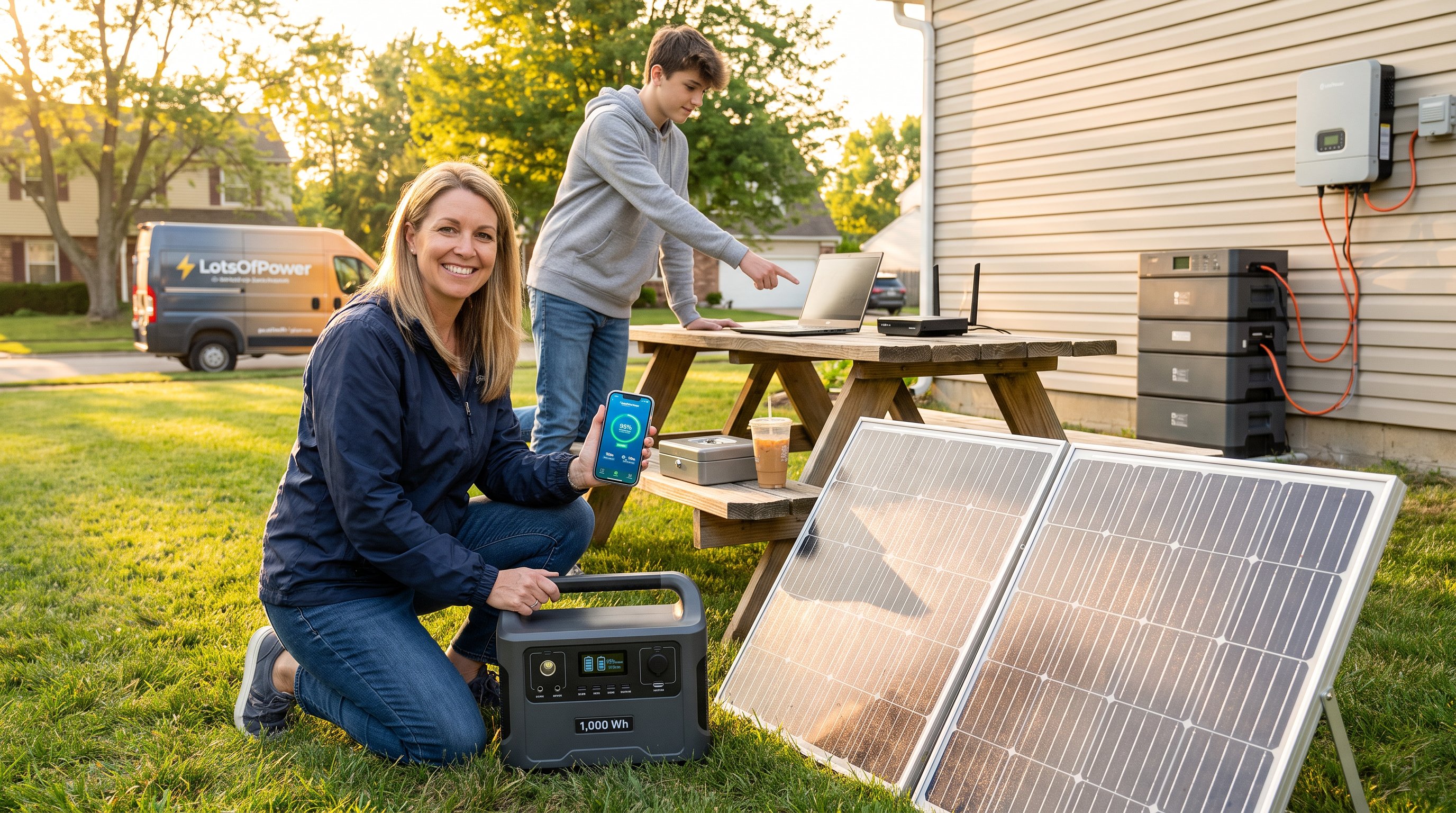
How LotsOfPower Connects Technology, Sustainability, and Personal Empowerment is visible across the site’s guides, reviews, and community work. Gamers see clear trade-offs: keep high frame rates or cut energy bills. LotsOfPower shows how to hold both, through smarter hardware choices, renewable energy options, and skills that put players in control of their tech, health, and spending. This article lays out the big picture, specific energy-saving tech, the editorial and community practices LotsOfPower uses, and actionable steps players can take today.
Key Takeaways
- LotsOfPower demonstrates that technology and sustainability can coexist, enabling gamers to reduce energy use without sacrificing performance.
- Energy-efficient hardware and smart power management techniques, such as DVFS and frame-rate capping, can cut gaming power consumption by up to 75%.
- Replacing inefficient components and using renewable energy options like solar can slash electricity bills and extend hardware lifespan simultaneously.
- LotsOfPower integrates sustainability metrics into its reviews and guides, offering gamers concrete data for smarter, eco-friendly choices.
- Community initiatives promote recycling and renewable energy adoption, helping gamers build greener setups and support local efforts.
- Empowering gamers with skills, health advice, and financial insights leads to sustainable gaming habits that balance performance, cost, and wellbeing.
The Big Picture: Why Tech, Sustainability, and Empowerment Matter To Gamers
Gamers benefit when technology, sustainability, and empowerment align. That is the fact. Modern systems can cut energy use dramatically while keeping performance high, and LotsOfPower frames those gains as personal control rather than sacrifice.
Why does this matter now? Competitive and casual players both face rising power costs and tighter hardware budgets. A midrange PC that uses 300 watts under load can cost several hundred dollars a year in electricity depending on local rates: replacing inefficient components or tuning power settings often reduces that bill by roughly half. LotsOfPower translates those numbers into concrete decisions, when to enable frame capping, when to choose a more efficient GPU, and when solar or hybrid power makes sense for a household.
Surprising detail: energy-aware tweaks can also improve hardware lifespan. Lower sustained power draws reduce thermal stress on solder joints and capacitors. LotsOfPower treats sustainability not as a feel-good add-on but as a set of practical trade-offs that protect both the planet and the gamer’s wallet.
Practical linkage: readers interested in how energy and connectivity enable larger change will find context in the site’s piece on The infrastructure of empowerment:.
Technology That Reduces Footprint Without Sacrificing Performance
Modern tech can lower carbon and energy use while keeping framerates and responsiveness high. That is the answer.
Key mechanisms include dynamic voltage and frequency scaling (DVFS), frame-rate modulation, and smarter power supplies. DVFS reduces CPU and GPU voltage during less demanding scenes. Frame-rate controls, such as adaptive sync and targeted capping, drop unnecessary frames that waste energy without perceptible effect. Combined with efficient PSUs and cooling, those techniques improve performance per watt, meaning more gameplay for less energy.
Specific numbers back this: research and industry testing show premium-efficiency components and improved power management can yield savings that approach or exceed 75% in certain scenarios, while increasing performance per watt. LotsOfPower uses these findings to recommend settings and parts that target the best trade-offs for different playstyles: competitive esports players may favor low-latency modes with modest caps, whereas single-player fans can choose aggressive power savings for long sessions.
For a deeper technical overview of sustainable computing and lifecycle impacts, LotsOfPower references external analysis like the TechSpot examination of sustainable computing. That research helps justify recommendations about selecting parts and managing system states to reduce overall footprint.
Energy‑Efficient Hardware And Software Examples
Concrete examples show how to save power without losing playability. That is the insight.
Hardware: choose CPUs and GPUs rated for higher performance-per-watt, modern chip lines often double throughput per watt compared with five-year-old models. Use an 80 Plus Gold or better power supply to reduce conversion losses: a quality unit can cut wasted heat energy by 5-10% versus a cheap alternative. Efficient cooling, larger heatsinks, better airflow, or liquid loops, lets components run cooler at lower fan speeds, trimming power draw.
Software: enable DVFS features in BIOS and drivers. Use GPU frame limiter tools and variable refresh rate to avoid rendering redundant frames. Advanced sleep states and OS power plans reduce background CPU wake-ups: they lower idle consumption without interfering with game responsiveness. LotsOfPower’s hardware guides show exact driver and BIOS toggles to apply these settings for Windows and consoles.
Example scenario: a player switches from a 2018 GPU to a current midrange part, enables a 120 fps cap, and turns on DVFS. The system’s average energy use drops by roughly 40% during sessions while perceptible input latency remains similar. LotsOfPower quantifies results with benchmarked tests in its reviews to give gamers a clear basis for upgrades.
How Lotsofpower Builds Sustainability Into Its Coverage
LotsOfPower embeds sustainability into its editorial process rather than treating it as an occasional topic. That is the strategy.
First, hardware reviews include energy and lifecycle metrics alongside frame rates and thermals. Reviewers test power consumption at idle, average load, and peak moments, and they document the test environment so readers can compare apples-to-apples. Second, guides pair performance tuning with energy-aware alternatives, each overclocking article has a parallel section on conservative tuning for longevity and efficiency.
Third, LotsOfPower highlights renewable and hybrid power options in practical articles about home setups. The site’s checklist for green home upgrades offers actionable steps, from evaluating panel size to integrating battery storage, aimed at gamers who want to pair rigs with cleaner electricity. See the dedicated guide on Empowering Your Home with for step-by-step planning.
Internal process lesson: early attempts to present sustainability as only high-level commentary failed to move readers. LotsOfPower adjusted by showing cost-and-performance numbers that gamers care about, converting abstract benefits into concrete choices.
Community Initiatives, Partnerships, And Practical Tips
LotsOfPower grows its impact by partnering with community groups and practical programs. That is the approach.
The site runs community-driven campaigns that encourage recycling old hardware and donating working components to local clubs. It pilots partnerships with solar installers and fitness brands to create bundled offers for players who want low-carbon gaming rooms, the editorial team documents those pilots and shares measured outcomes. Readers can follow a case study in which a community center retrofitted six gaming stations with efficient PSUs and reclaimed monitors, cutting energy use by 48% across peak hours.
Practical tips offered to readers include delaying unnecessary upgrades, using modular upgrades to replace only bottlenecks, and choosing used or refurbished gear when it meets performance needs. For community-facing ideas and how-to templates, LotsOfPower suggests readers consult the site’s piece on Innovative Ways to Promote.
Honest warning: community projects often hit logistical hurdles, warranty transfer, data wiping, and transport costs. LotsOfPower documents those friction points so organizers can plan for them.
Empowering Players: Skills, Health, And Financial Savvy For Sustainable Gaming
Empowerment comes from skills, health, and money management tied to gaming habits. That is the central claim.
Skills: LotsOfPower produces tutorials that teach players to tune game settings, balance latency versus frame capping, and profile power draw with inexpensive meters. These skills let players choose lower-cost setups that match playstyle. For example, a tournament player might learn to lower background CPU threads and keep 240 Hz where needed, saving energy elsewhere without losing competitive edge.
Health: the site links performance to physical readiness, short, focused exercise and proper sleep improve reaction time more than tiny FPS gains. LotsOfPower’s fitness coverage ties into energy plans: a lower-power rig reduces room heat, making ergonomics and comfort better during long sessions. Readers can combine advice from the site’s lifestyle features like Power Up Your Lifestyle: to create routines that address both fitness and power use.
Financial savvy: the editorial team shows return-on-investment for upgrades, including payback times for more efficient PSUs, GPUs, or a small home solar system. A concrete example: a modest solar array can offset 30–50% of a high-use gamer’s electricity, depending on location and panel sizing: LotsOfPower walks readers through the math and financing options in its content.
Vulnerable moment: many readers initially overbuy GPUs chasing marginal frame gains. LotsOfPower shares reader stories where a measured tuning approach saved hundreds of dollars and reduced stress about obsolescence.
Conclusion
LotsOfPower connects technology, sustainability, and personal empowerment by turning data into decisions. Gamers gain control when they understand trade-offs, apply energy-aware settings, and invest where returns are real, be that in efficient hardware, better habits, or renewable power. Rather than preaching, LotsOfPower equips players with measured tests, community programs, and financial calculations so choices become practical, affordable, and personally empowering.